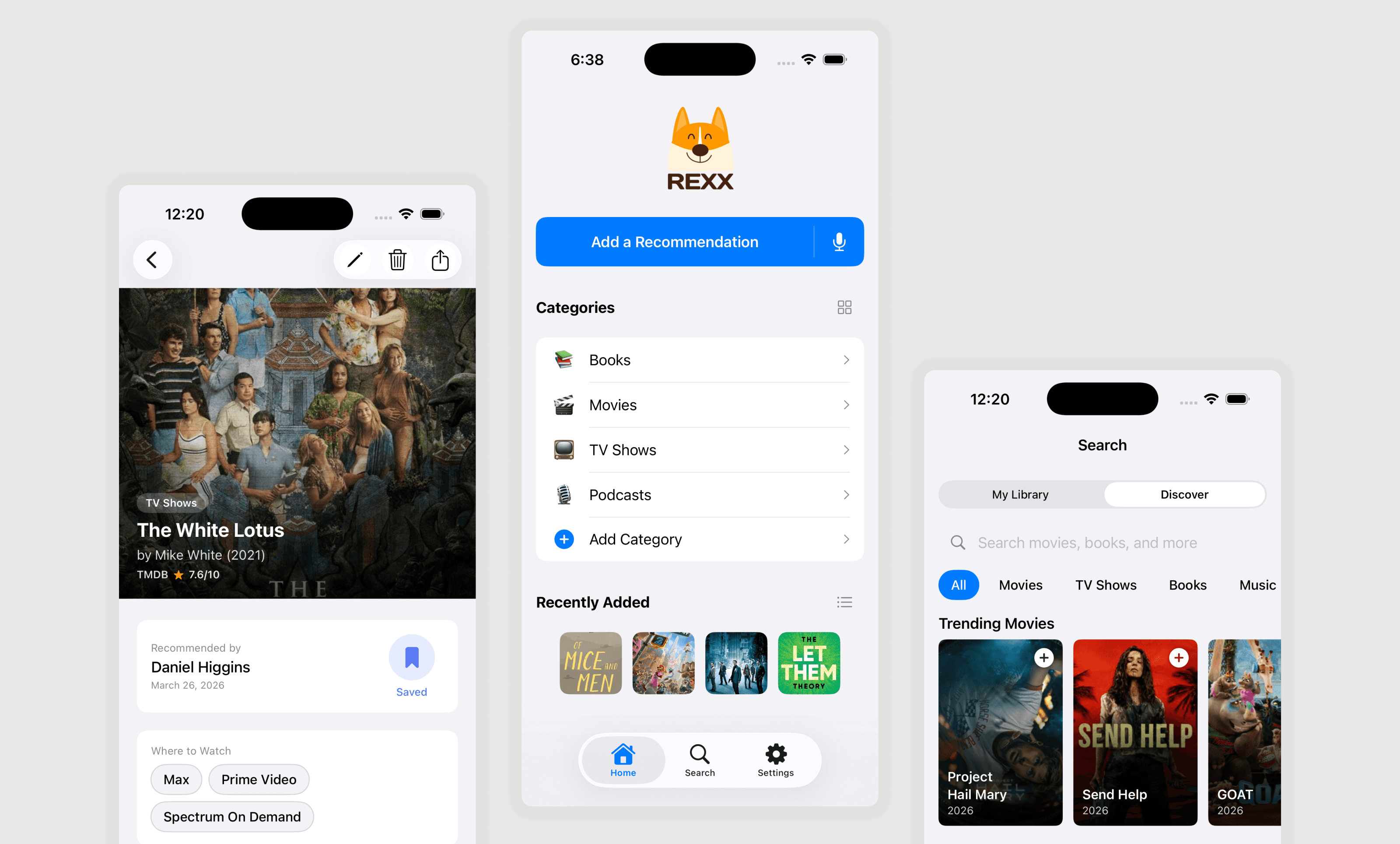
A better way to remember what you love
Creating a simple, intuitive app that helps people save, organize, and rediscover recommendations from friends.
Product Design
Product Vision & Strategy
Product Discovery & Research
Prototyping & Testing
Design Engineering
Overview
Length
Ongoing (initial 6-week design sprint + continued iteration)
Role
Founder, Designer & Developer
Scope
Zero-to-one product design and development, from discovery through App Store launch.
Team
Solo. I designed and built this end-to-end using Claude Code and Xcode.
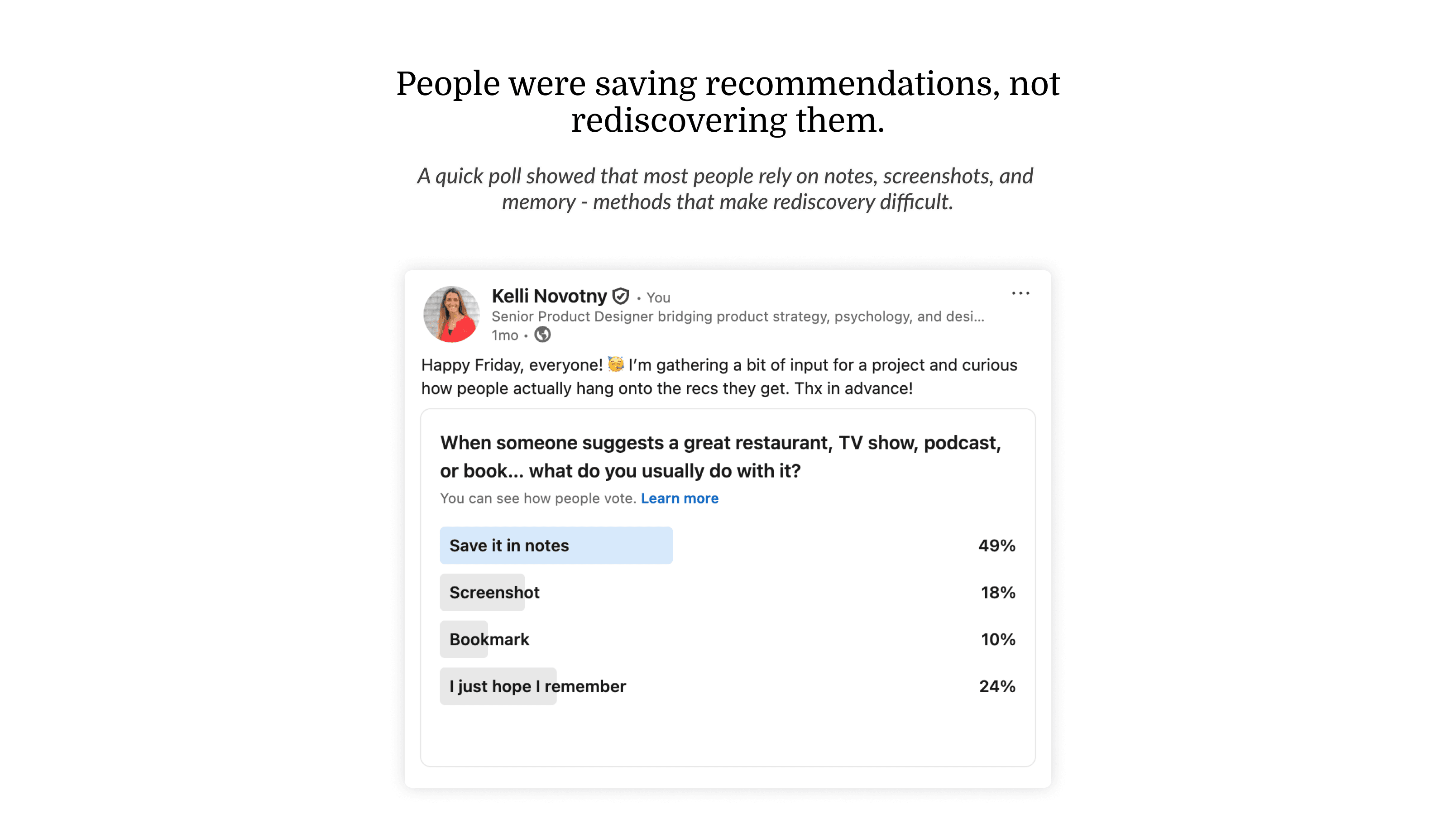
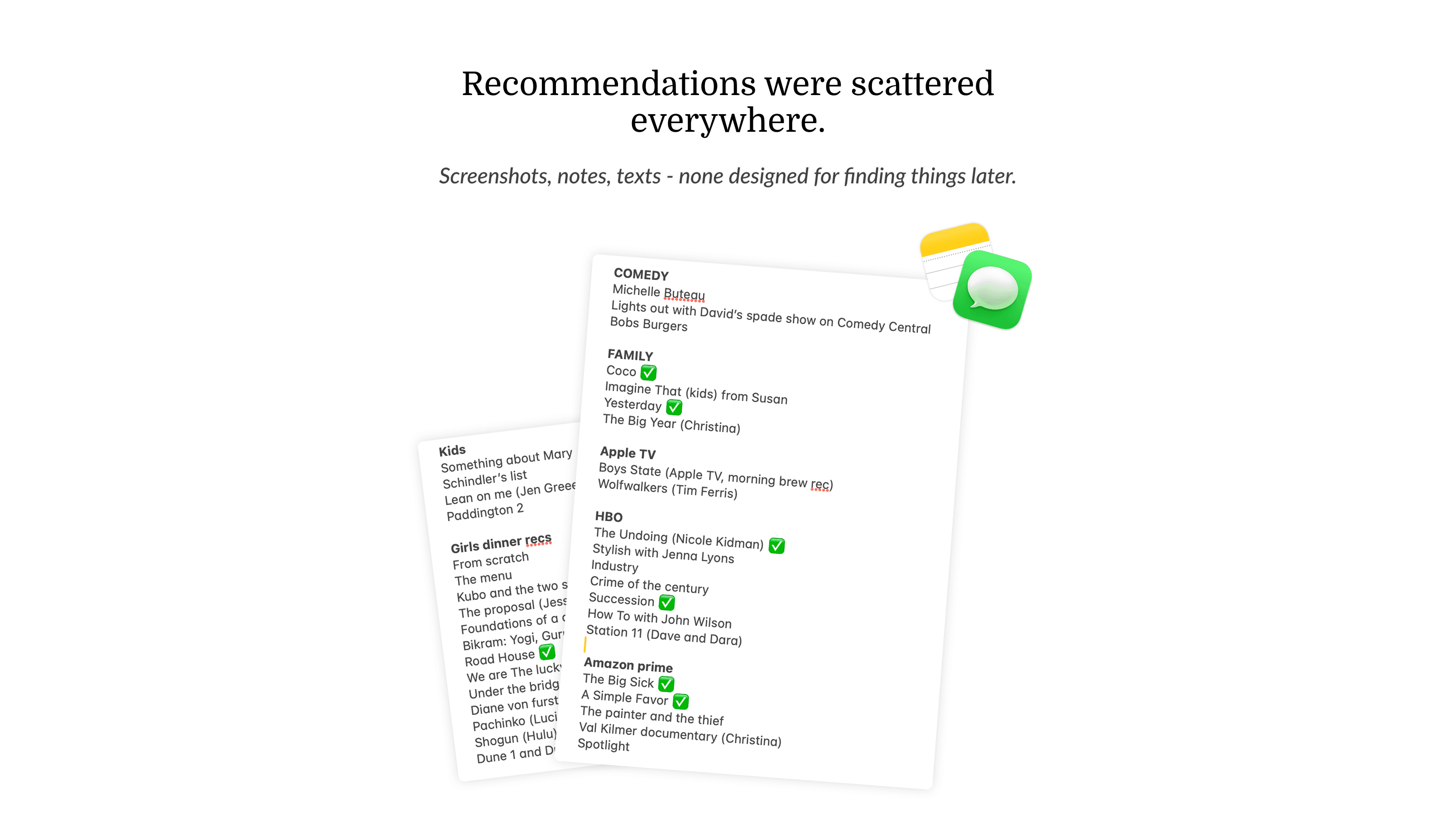
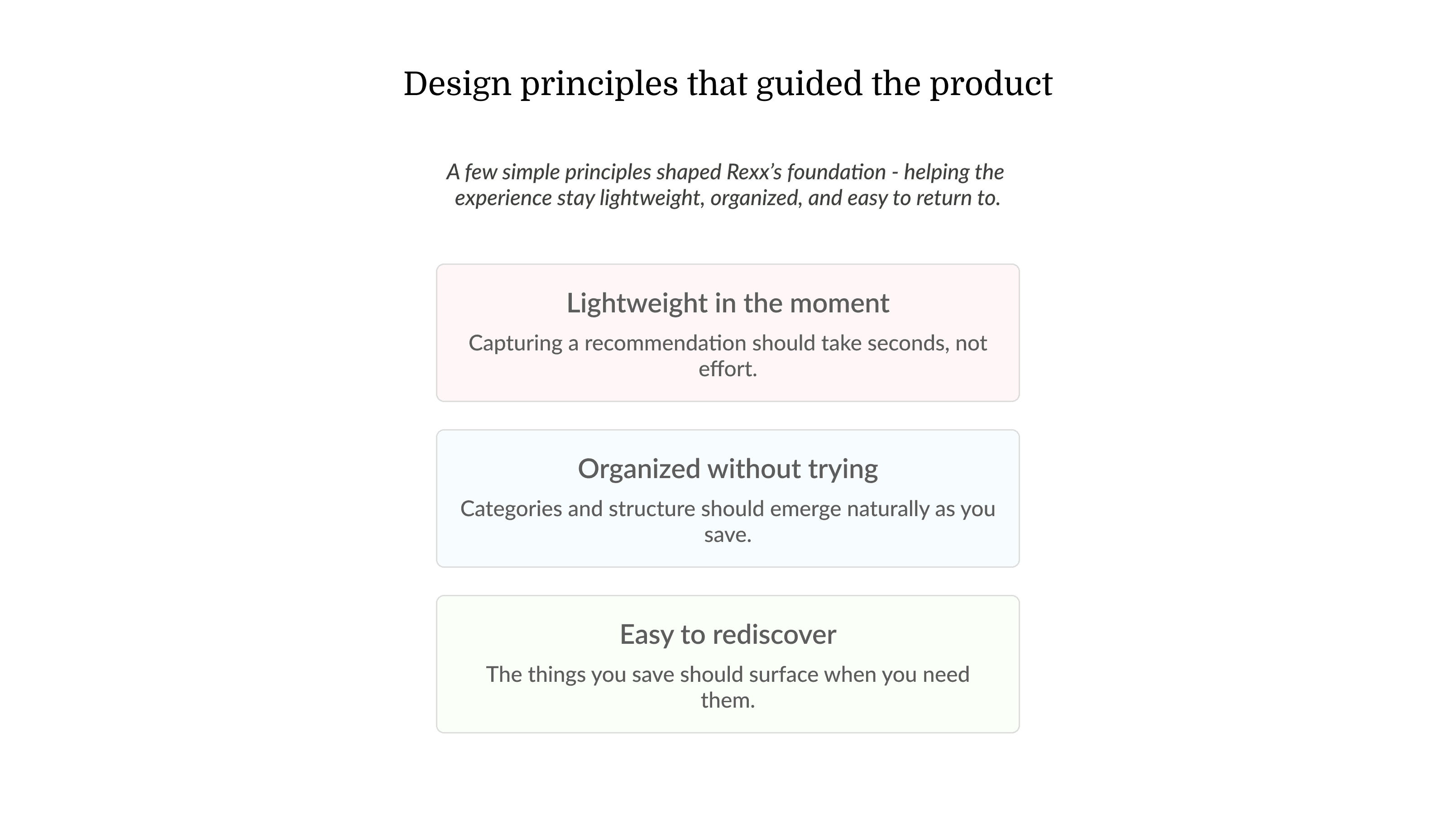
How might we make it effortless to capture, organize, and rediscover recommendations from people you trust - so they actually get used instead of disappearing into screenshots and notes?
Why this mattered
Capture was happening across notes, screenshots, texts - rediscovery rarely was
The problem wasn’t motivation; it was the lack of a dependable system
Recommendations people cared about were slipping through the cracks
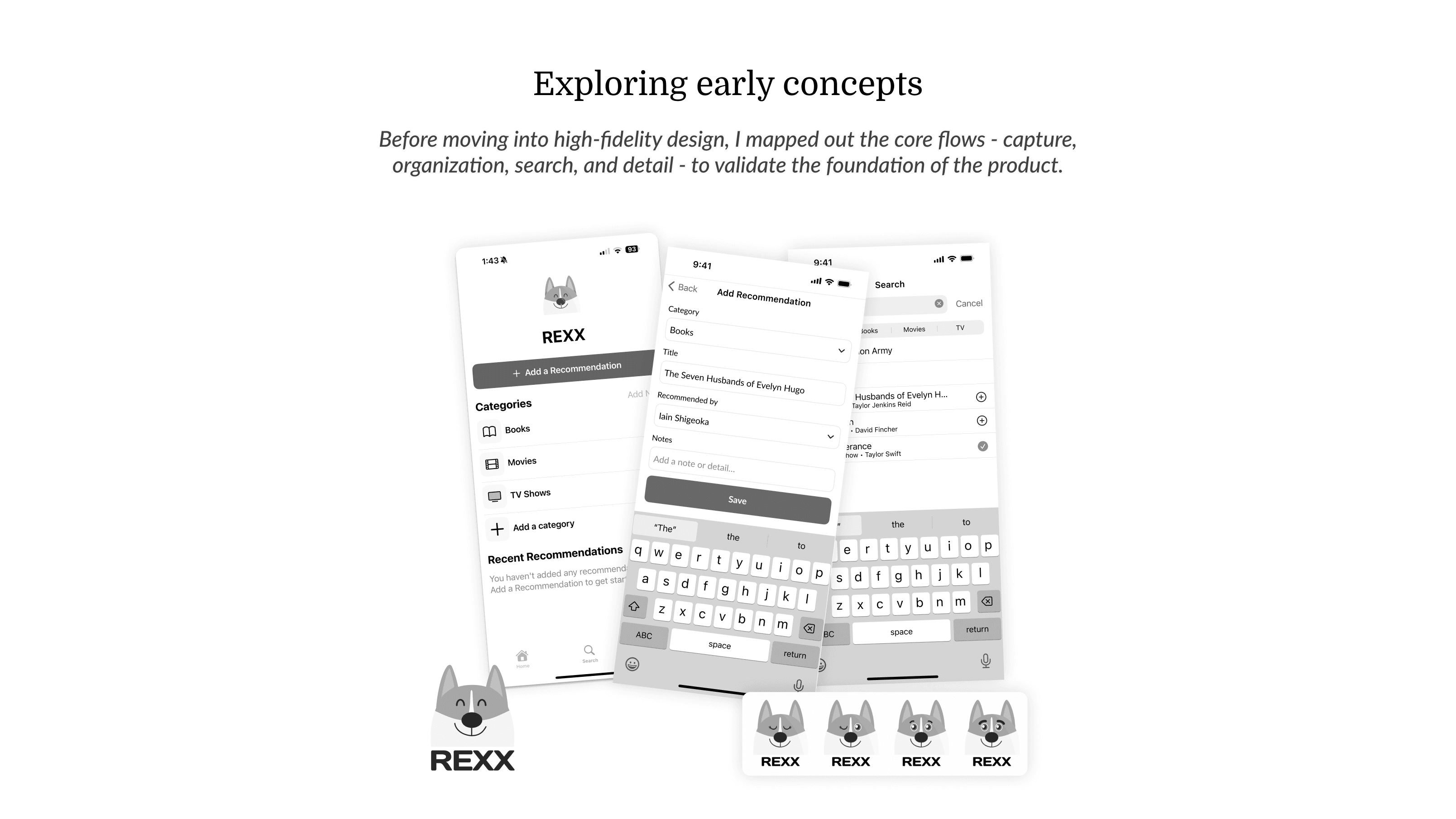
The Product
The core experience, from capture to rediscovery.
Download on the App Store.
Tell Rexx
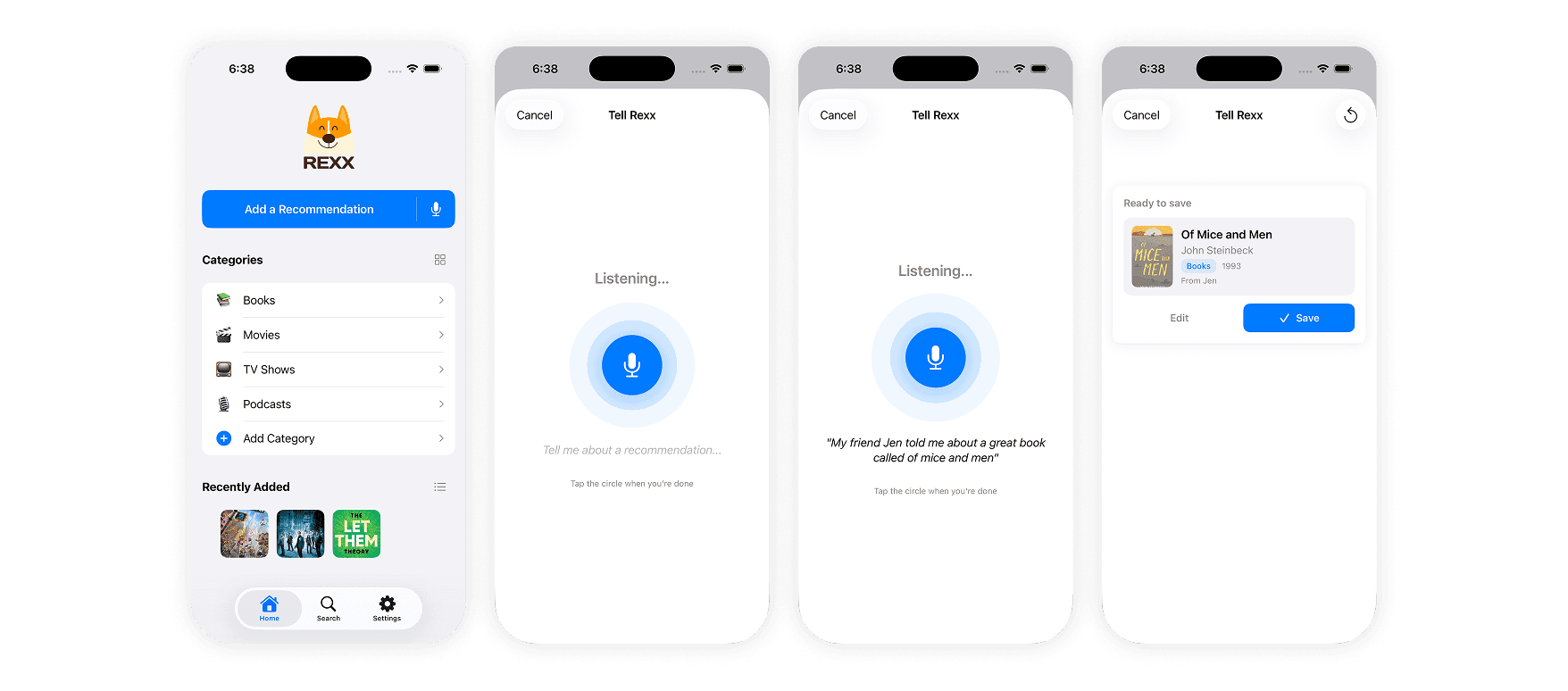
Recommendations happen in conversation - someone says "you have to read this" and you nod and forget it by morning. The existing add flow required tapping through a form: title, category, who it came from. Enough friction that people just didn't do it in the moment.
Tell Rexx removes the form entirely. The mic lives in the primary CTA - one tap away. Speak naturally - "My friend Jen told me about a great book called Of Mice and Men" - and Rexx figures out the rest. The Claude API parses the natural language and extracts the title, author, category, year, and who recommended it.
The result appears as a confirmation card before anything saves. That moment - Ready to save - is the whole design. Natural language is messy and the user needs to trust that Rexx heard them correctly. Edit is always available. Nothing commits without a tap.
Live and learning
Strong interest from early users
300+ installs in the first month with zero paid marketing, all organic word of mouth and social
Next steps
Iterating on voice-powered AI input (Tell Rexx), Goodreads and Letterboxd API integration, notifications
Impact
Retention
Users were able to store and retrieve saved places, shows, books, and experiences.
Faster Recall
Structured categories and search made it easier for users to find recommendations quickly.
Easier
Clear organization, visual cues, and a single home for recommendations helped users feel more prepared when deciding what to watch, read, or do.
Reflection
Designing Rexx reinforced the power of building around real behavior, not ideal behavior. People weren’t ignoring recommendations - they simply didn’t have a system designed for them. That insight shaped every decision, from the quick-add flow to how collections work and how metadata appears. Great products emerge when you meet users where they are, not where you wish they were.
Interested?
Let’s connect.
I’m open to roles where design is a true partner in shaping product direction. If you’re building something with purpose, I’d love to chat.